
How to Search Hooker County Criminal Dockets
Start with the statewide Nebraska.gov JUSTICE One-Time Court Case Search. It covers both county and district trial courts. Enter the party's name, pick Hooker County, and choose the right court type. Selecting District will hide a Hooker County misdemeanor, traffic, or municipal-ordinance case. A felony, though, ordinarily sits in the district-court channel once the preliminary stage is done.
The live one-time search costs $17 and returns up to 30 cases. Results stay viewable for three calendar days. A new entry can take up to 24 hours to show up. An empty result means the chosen JUSTICE parameters produced nothing, not that no record exists. The state also sells subscriber access for recurring needs. Still, the courthouse clerk remains the go-to for older or incomplete files.
There are offline routes too. Nebraska's public-access rule lets anyone inspect public electronic records. The terminal or device sits in the clerk's office. The Judicial Branch also announced a 2024 law-library pilot. It offers free public desktop access at UNL and Creighton; confirm availability before making the trip. If a Hooker record is missing, old, or restricted online, call the clerk. That clerk keeps the court's file, so name the exact court type.
- Enter the party name with the spelling used in the court record.
- Select Hooker County and choose County or District court.
- Use CR as the case type when a criminal classification is known.
- Open the matching result and compare the caption, year, court, and party role.
- Read the case summary and Register of Actions separately, then preserve the full case number.
The live JUSTICE one-time search is the official access point shown below.
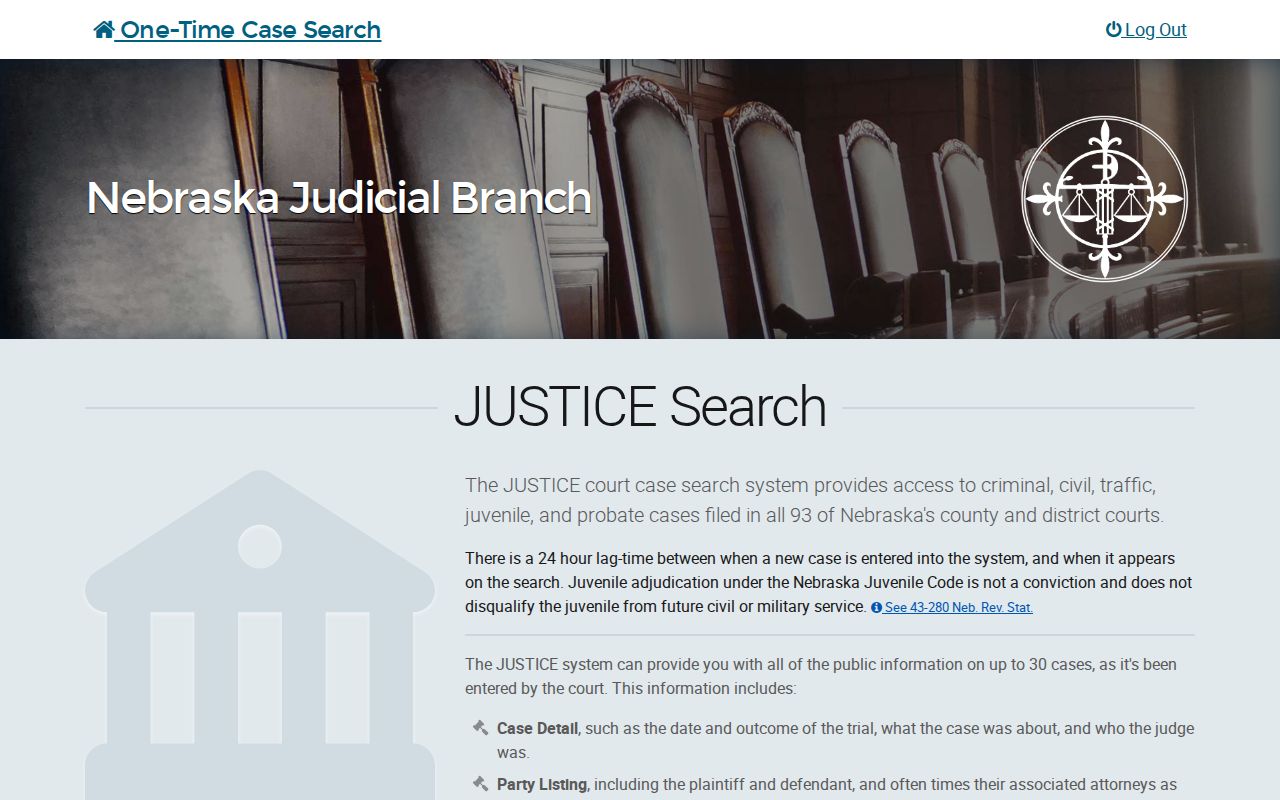
Rely on the agreement screen and the current charge the live service displays. Older search instructions may not match the access terms in place today.
Hooker County Criminal Docket Search Fields
JUSTICE offers many ways to narrow a Hooker County criminal docket search. Fields include party name, party type for a person or entity, county, case year, court type, case type, subtype, judge, attorney, and sort order. Search a party, not a witness. With a common name, adding county, court type, and a likely year keeps the results usable without guessing at a case number.
Names go in as a last name alone or in the fuller Last Name, First Name, M, Suffix format. One wrong middle initial can kill a match. If the first try comes back blank, recheck the spelling. Then switch to the other court type. Choose the entity option when the party is a Hooker County organization, city, county, or agency.
Resist stacking filters before checking the spelling. The statewide form is built to combine fields, yet a tight year or subtype filter can screen out the very entry you want. Once a result appears, save the court selection and the full case number. You will want them for any later talk with the Hooker clerk. That works far better than a name hit alone, especially when a surname is shared.
The official JUSTICE search-form demonstration shows each of these fields in place.
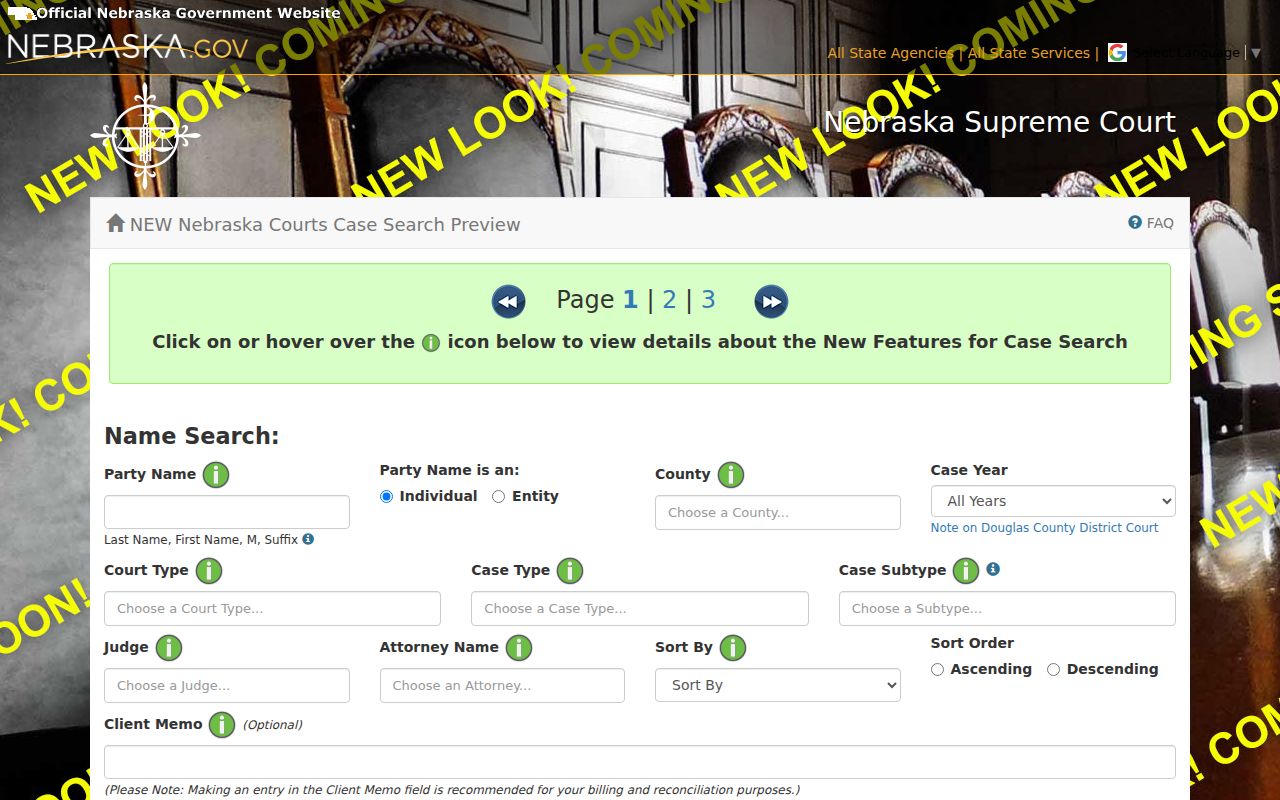
Field choices steer a search toward the correct court record. Court type deserves as much attention as the party name itself.
What a Hooker County Criminal Docket Shows
A result's detail page can hold a lot. Expect the case summary, party roles, and public offense information. Financial entries, public judge notes, and nonconfidential electronic images may appear as well. The Register of Actions is the chronological heart of it. Read each Hooker County event in context. A charge listing is not a conviction. And a payment entry alone does not establish the final disposition.
| Case number | The court, Hooker County number, case type, year, and sequence identify the matter. |
|---|---|
| Caption and parties | These fields help distinguish similarly named people and show the party’s role. |
| Case summary | Public status, offense information, attorney, judge, and financial details may appear here. |
| Register of Actions | Dated filings, hearings, orders, and other chronological court events. |
| Images | Links may be available for public electronic documents, subject to restriction and coverage limits. |
The official JUSTICE results demonstration displays the result-row fields that lead into a case detail.
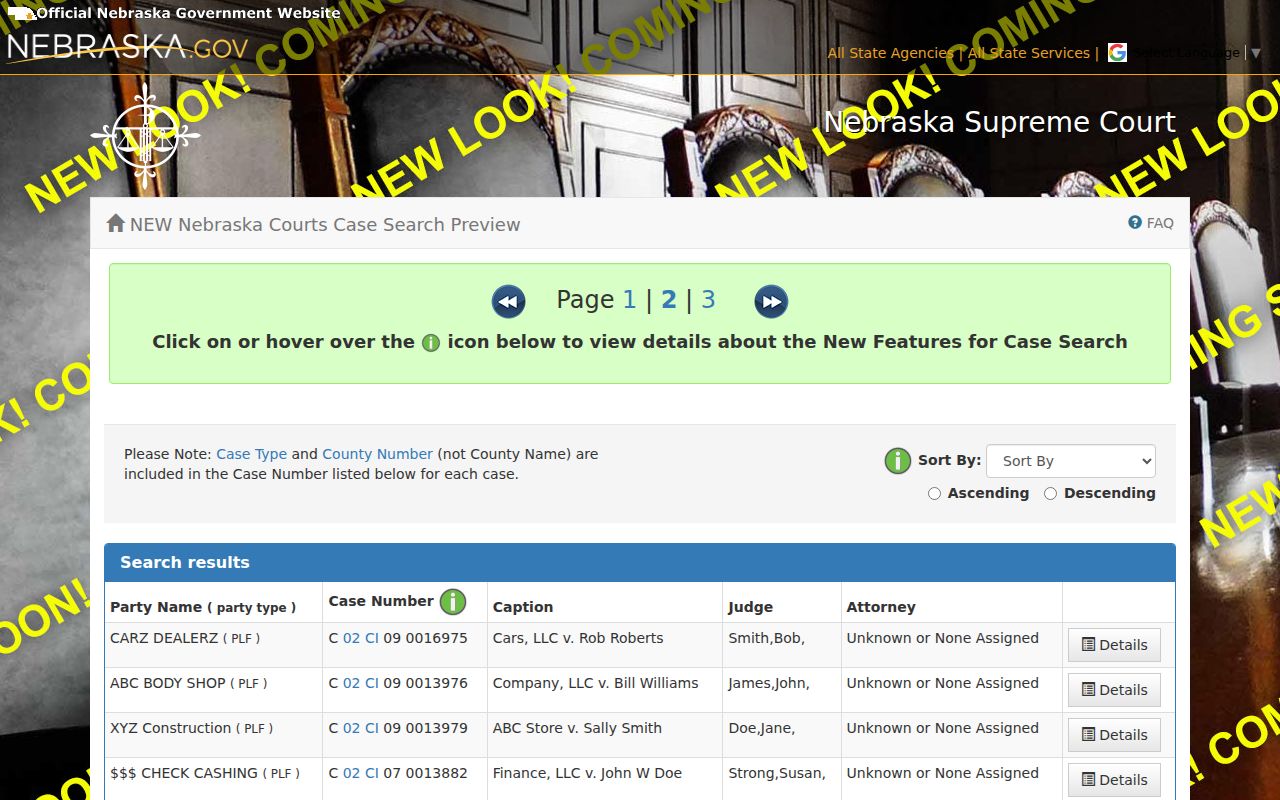
Match the caption and case number before assuming the result is the Hooker County criminal case you want.
Hooker County Criminal Case Numbers
A Hooker case number carries real structure. The letter C means county court and D means district court. 93 is Hooker County's number. CR flags a criminal case type. A two-digit year plus an identifier of up to seven digits rounds it out. Official examples include CR 14 20304 and D93 CI-14-0000019.
Never build a number from those parts yourself. Copy it exactly from JUSTICE or the clerk. Then treat the court, county, type, year, caption, and party together as an identity check. The same structure also uses codes like CI, SC, PR, and TR for other case categories. So a code only means something alongside the court selection.
When you request a copy, include every piece of that exact identifier. It helps the Hooker clerk pull the right criminal case instead of a similarly named civil, probate, small-claims, or traffic matter.
Stages on a Hooker County Criminal Docket
A public Hooker County criminal Register of Actions usually traces a familiar arc. It runs from filing through arraignment, pretrial settings, a plea or trial event, and disposition. Each event may carry its own date and order. Continuances, notices, financial activity, and later filings can appear too, which is why the chronological ROA beats a caption alone for seeing what really happened.
Docket flow: Charge Filed › Arraignment › Pretrial Setting › Plea or Trial › Disposition
Hooker County Criminal Register Images
A JUSTICE one-time search can return links to electronic images of nonconfidential court documents. The coverage starts with filings and uploads after April 16, 2008. That date is not a promise, though. Sealed, confidential, restricted, audio, exhibit, oversized, and older paper material may stay offline even when the Hooker County case index and ROA both appear in results.
When an image you expected is missing, ask the right Hooker County clerk for that specific item. Name the court, the full case number, the caption, the document, and its date. One precise request beats asking for a whole file. A complete criminal docket file can hold restricted material the clerk cannot hand over.
Images and the ROA do different jobs. The image is a copy of a filing or order; the ROA is the event list that places each document in the case chronology. Audio and typed transcripts are separate products. A hearing transcript needs a hearing-specific request, and a docket printout is never a transcript.
Which Hooker County Court Holds Criminal Dockets
Hooker County Court takes the routine criminal load: misdemeanors, traffic and infraction cases, municipal-ordinance matters, and felony preliminary hearings. Its clerk magistrate keeps the county-court records. Mullen ordinance cases also land here. Mullen runs no separate public municipal-court docket or portal.
Felony cases belong to the Hooker County Clerk of District Court, who maintains the district criminal dockets, judgments, and case files. Both court levels sit inside JUSTICE. Still, match the clerk and the court type to the case. Do that before asking for a certified record or confirming a hearing.
Hooker County Criminal Clerk Routes
One courthouse, two record lanes. Both court levels use the statewide system, but the routing still matters. Bring a county-court CR matter, misdemeanor, traffic ticket, or city-ordinance case to the county-court clerk. Take any district-court criminal matter, district judgment, or district case-file request to Jessica Hampton, the Clerk of District Court named on the county page.
For a certified disposition, judgment, or any public Hooker County file copy, the Nebraska CC 3:29 request form is the practical route. It asks for the court, county, case number, case name, and document. An emailed noncertified electronic copy carries no charge. Mailed and certified options come with different stated fees, and the clerk may estimate the cost or ask for payment before doing the work.
A county public-record request can go to the responsible department, and the County Clerk may forward it when the requester is unsure where it belongs. For a court document, that extra hop can slow things down or leave the word "docket" vague. Send the request straight to the county-court clerk or the district clerk, name the record, and add a date or date range. Asking for every criminal case in the county is not a workable opening move.
Public Access and Sealed Hooker County Criminal Dockets
Nebraska court records are public. A statute, rule, court order, confidentiality provision, or sealing order says otherwise. A public Hooker County index still does not open every document. Adult records under seal ordinarily stay out of JUSTICE results. Juvenile files follow separate confidentiality rules. The clerk can explain what route exists but cannot hand over material that law or order withholds.
Key rules: Nebraska Revised Statute §29-3523 provides the adult criminal-record sealing framework. Nebraska Revised Statute §43-2,108 establishes confidentiality limits for juvenile records. Section 43-2,108.05 addresses sealed juvenile records.
Nebraska’s adult record-sealing statute is the source represented below.
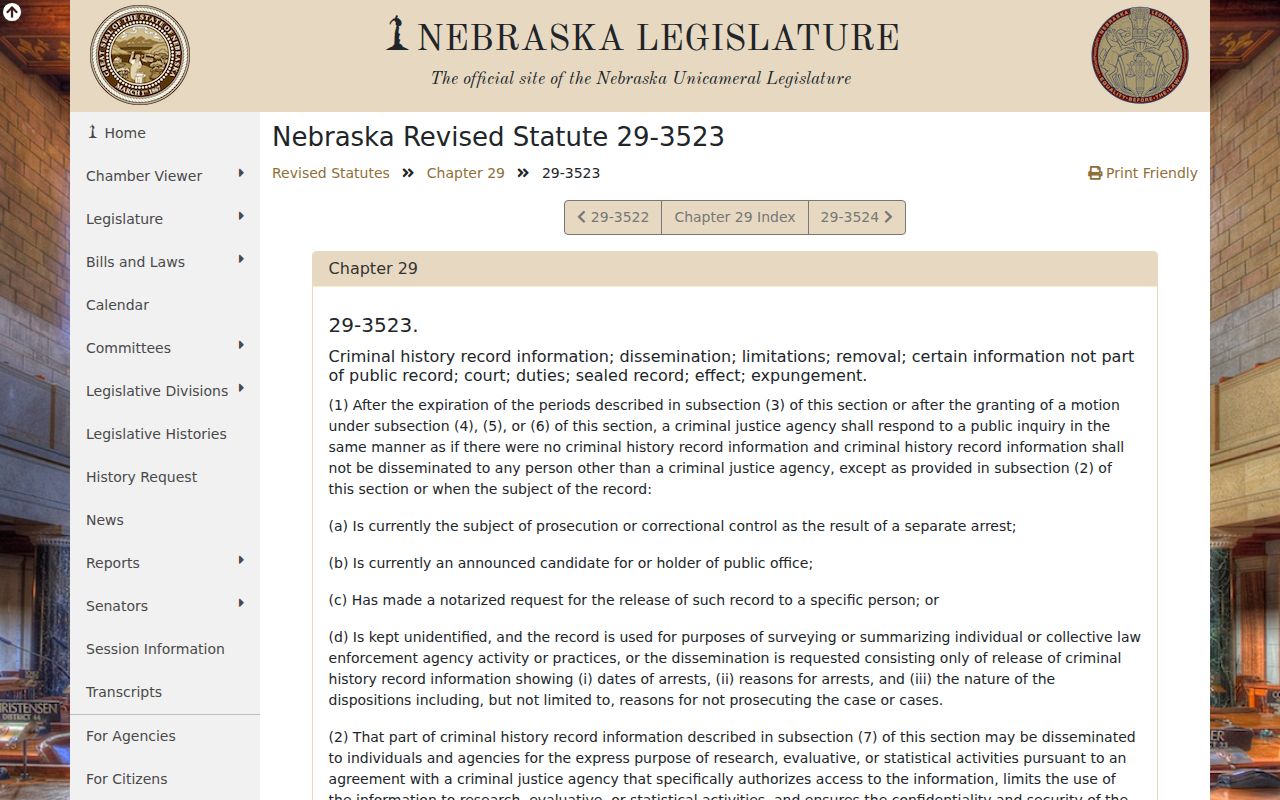
For a public adult case, work from the current ROA or a clerk-supplied copy. Do not try to reconstruct sealed material.
Hooker County Criminal Sealing Rules
Adult sealing is not expungement, and it does not erase private copies held elsewhere. Nebraska Judicial Branch guidance applies here. A Hooker County case dismissed or ending in acquittal after December 31, 2016 may be sealed automatically in specified circumstances. Earlier cases and particular situations follow different rules. Someone seeking a court-ordered seal files the required motion in the court that heard the case. Get the order before leaving.
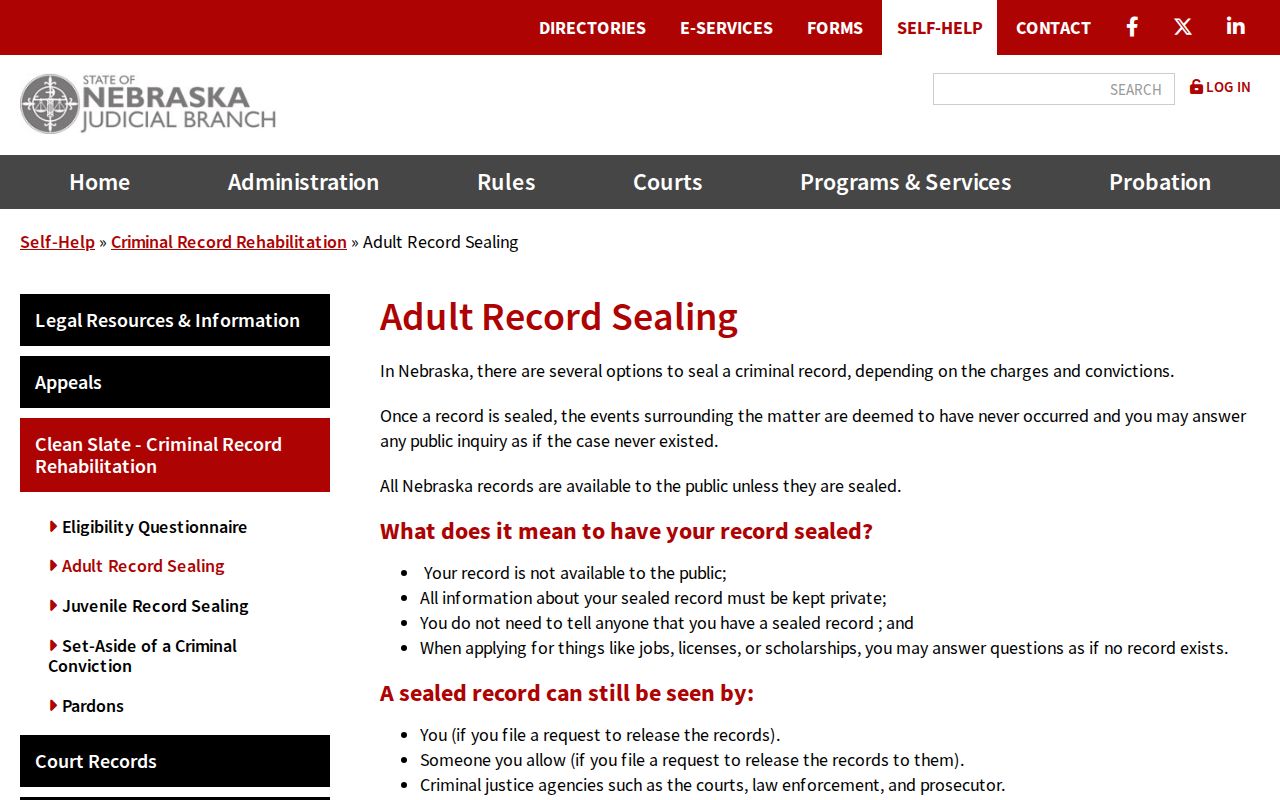
The Nebraska Judicial Branch adult record-sealing guidance lays out the court process and the distinction from expungement.
Statewide computer updates can lag days behind an order. When access status matters, check any public search result against the current court record.