
How to Search Hooker County Civil Dockets
Start with the Nebraska.gov JUSTICE One-Time Court Case Search. It is the statewide online route to Hooker County trial-court records. Choose Hooker County. Then pick County or District court. Type the party spelling exactly as it appears in the case. Name searches accept a person or an entity. That helps when a Hooker County city, agency, or organization is a named party.
Costs and limits matter here. The one-time search costs $17. It returns no more than 30 cases and holds results for three calendar days. Narrow the field by court type, case year, case type, or subtype. New Hooker County entries can lag by 24 hours. An empty result or a missing older document does not mean the case history is gone. Ask the court clerk instead of treating the online result as complete.
The clerk's office offers other channels. Under Nebraska's public-access rule, you may inspect public electronic records at a terminal or device in the office. The county-court clerk keeps county-court files, and the district clerk keeps district civil records. Give the clerk the court type, caption, case number, and document date. That gives the request a usable starting point. A general county request may get forwarded, but the responsible court clerk is the direct route.
- Choose Hooker County and identify County or District court.
- Search the full party name or use the entity option for an organization.
- Add a likely year, civil case type, or subtype only when the broader result needs narrowing.
- Compare the caption, court, case number, filing date, judge, and party role.
- Open the Register of Actions and preserve the exact case number for a clerk request.
Hooker County Civil Docket Court Split
Hooker County Court takes civil matters under $52,000 and small claims under $3,500. Probate, guardianship, conservatorship, adoption, eminent domain, and replevin also land here. A small claim usually carries the SC code. County-court civil cases carry a county-court prefix, not the district one.
Hooker County District Court hears equity and domestic relations. It also takes civil claims above the county-court limit, plus appeals from county court or administrative agencies. Its clerk keeps the district civil records, judgments, dockets, and files. Getting the court type right is the first real step. That comes before any civil lookup.
The split matters in practice. Two searches under the same name can return different records. A small claim does not become a district case. The civil caption alone does not change that. An appeal from county court moves into the district-court record lane instead. So check both the court type and the case category. Then ask the clerk for a copy.
Hooker County’s District Court filing-fee page is the official local source for fee amounts.
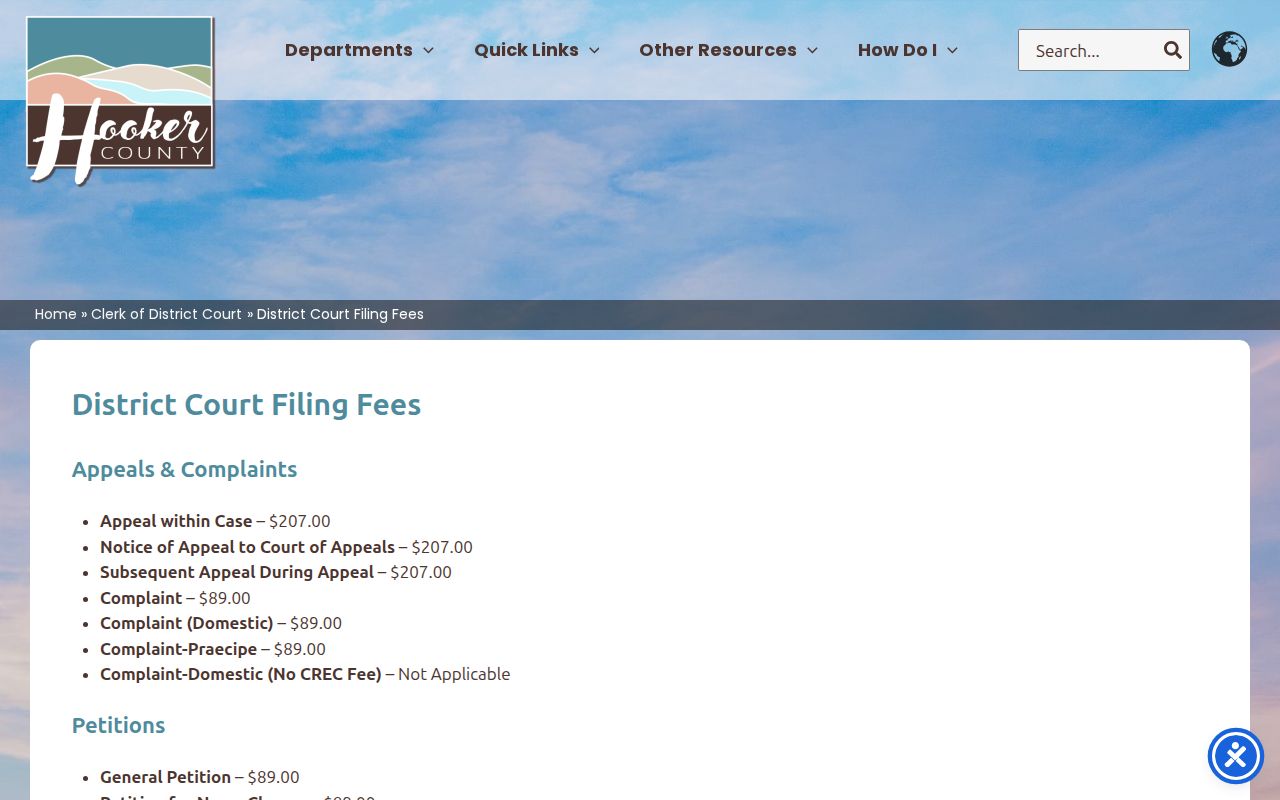
The filing categories on that page reinforce the same point. A district matter and a county-court matter follow different clerk routes, even when both turn up through the same JUSTICE search.
What a Hooker County Civil Docket Shows
A JUSTICE result can show a party name and type, case number, caption, judge, attorney, and a link to details. The Hooker County district-court record framework reaches further. It covers case ID, caption, subtype, judge, filing dates, summons issuance and return, Register of Actions, trial docket, financial record, indexes, and the case file. Read with care, though. A calendar entry is not a complete case file, and a complaint title does not establish the result.
| Case ID | Identifies the court, Hooker County, type, year, and case sequence. |
|---|---|
| Caption and parties | Confirm the case title and the role of each named party before relying on a result. |
| Filing history | The ROA can show filing dates, service activity, answers, motions, and orders. |
| Trial docket | District-court docket material may show scheduled case activity alongside the ROA. |
| Financial record | May reflect costs, judgments, and payments, but should be read with the relevant order. |
District Court Records Maintenance Rule §6-1523 is the official record-description source shown below.
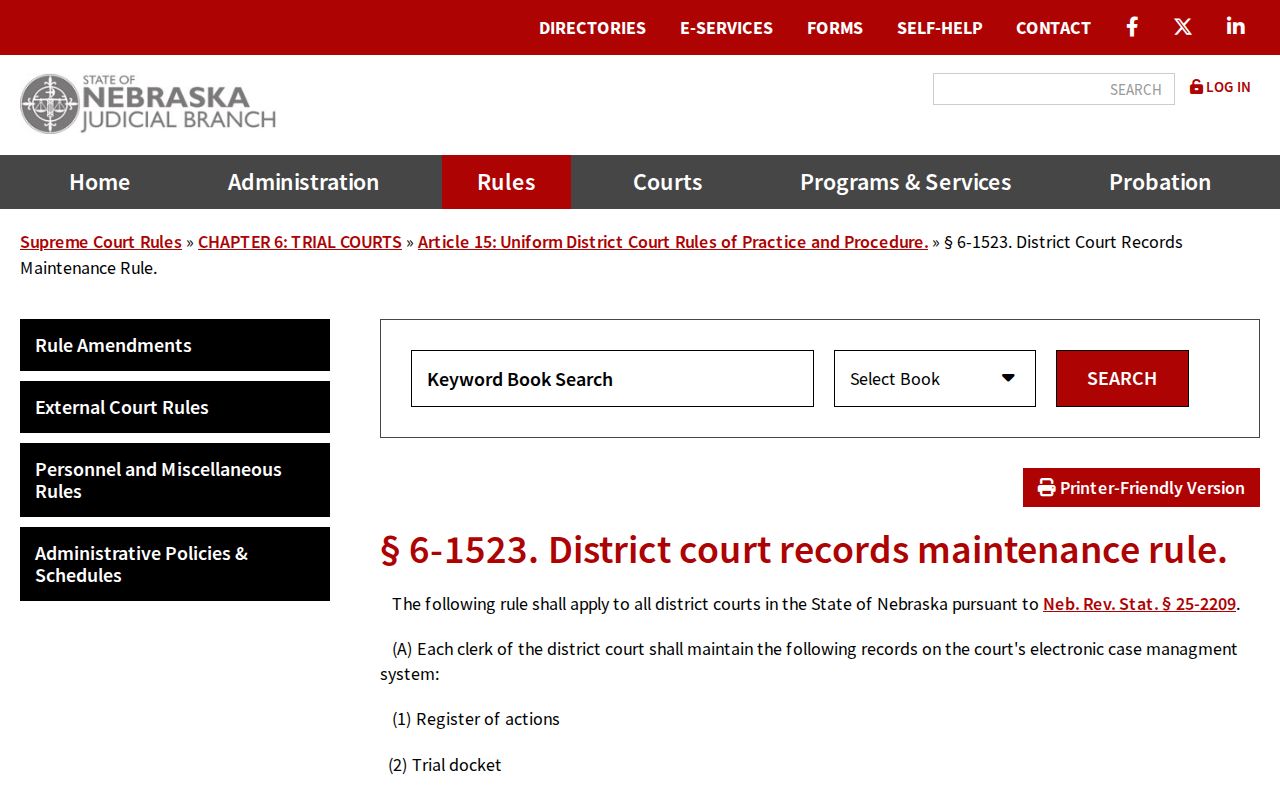
Let the ROA trace what happened over time. When an image is not available, ask the clerk for the particular public document you need.
Hooker County Civil Docket Case Codes
Case numbers carry routing clues. C marks County court and D marks District court, while 93 identifies Hooker County. Civil, small-claims, probate, and juvenile categories use codes such as CI, SC, PR, and JV. The two-digit case year and identifier finish the number.
Treat the code as a search aid only. It says nothing about a case's contents or merits. Copy it exactly from JUSTICE or the clerk, then confirm the caption, court, case year, and party names. That extra check pays off when a name pulls up more than one Hooker County civil result.
Types of Civil Cases on the Hooker County Docket
County and district courts do not carry the same civil docket. The lower-value civil and small-claims lane sits in county court. District court carries general-jurisdiction civil and domestic relations. Probate and guardianship categories can appear in county court. Even so, an index may list a case while sensitive underlying information stays restricted.
- County-court civil matters under $52,000, generally identified with CI when applicable.
- Small claims under $3,500, commonly routed through the SC case category.
- Probate, guardianship, and conservatorship matters in the county-court channel.
- Adoption, eminent-domain, and replevin categories assigned by county-court jurisdiction.
- District-court equity, domestic-relations, higher-value civil matters, and appeals.
Hooker County Civil Docket Identity Checks
Slow down before trusting a civil search hit. A caption alone proves little. Compare the party names, the court, the case year, the filing date, the judge, and the full case number with what you already know. Surnames match easily in a small county. Entity searches work better when a public body or organization is the party you are chasing.
The Register of Actions then gives a Hooker County civil docket its shape. Service, an answer, a motion, a dismissal, a judgment, or an appeal may each show up. Each lands at a different point in the chronology. Read the whole sequence. A caption or one lone entry cannot support a conclusion about the case. Nebraska Public Records Act §84-712 is the official statute governing public access to these records.
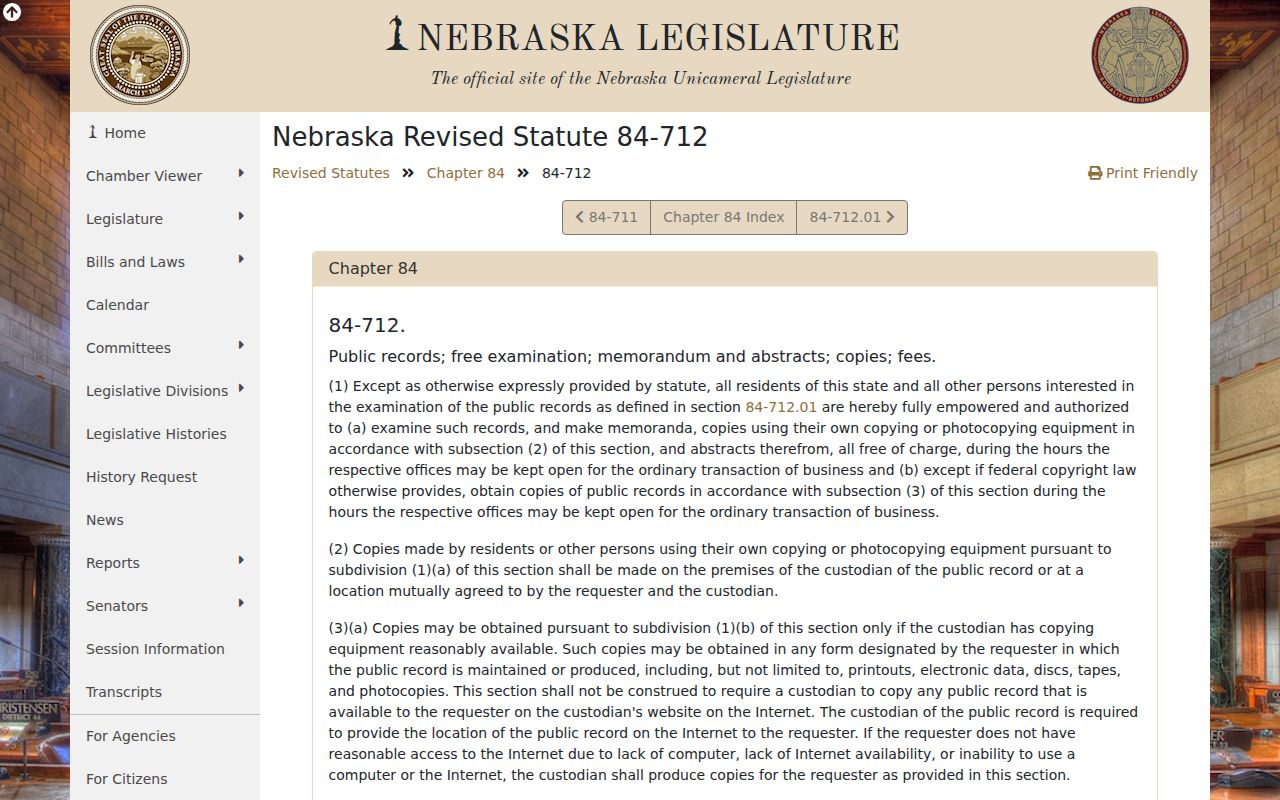
That statute opens the door to public records. Court rules and confidentiality limits still control what the Hooker County clerk may hand over in a given case.
Settings and Hearings on Hooker County Civil Dockets
A Hooker County civil Register of Actions may list a setting, a notice, or a continuance. It may also show an order that shifts the case. Need dates right now or ahead? The Nebraska Multi-Court Case Calendar covers County or District court selection, county selection, date searches, and last-name searches. It is a handy check. It is not a full history of past hearings.
Confirm anything you find with the right Hooker clerk. Do that mainly after a continuance, a court notice, or an emergency change. The calendar itself warns that no result does not mean no court date exists. For the full process, see the Hooker County court calendar page.
Hooker County Civil Docket Copies
To request a public court document, give the correct clerk the right details. Those are the court, the full case number, the caption, the document you want, and its date. The Nebraska CC 3:29 copy request form lists four delivery choices. An emailed noncertified copy costs nothing. A mailed noncertified copy runs $0.25 per page. An emailed certified copy is $1 per request. A mailed certified copy is $1 per seal plus $0.25 per page.
A plain electronic copy works fine for reading. Certification is separate. The clerk decides what can be certified. A sealed, unavailable, or out-of-custody item cannot be certified. A transcript is different again. It needs the hearing-specific transcript process and may require a reporter or court approval.
Match the cost to your purpose. The free emailed noncertified copy is the cheapest way to read a filing. Certification is a real Hooker County clerk service, not a sticker you can add to any file. If you do not know the page count, ask for an estimate. Say you will pay the lawful cost. That keeps a request specific without assuming the whole case file is public. Nebraska Revised Statute §84-712.01 defines covered public records, including government computer files that stay public.
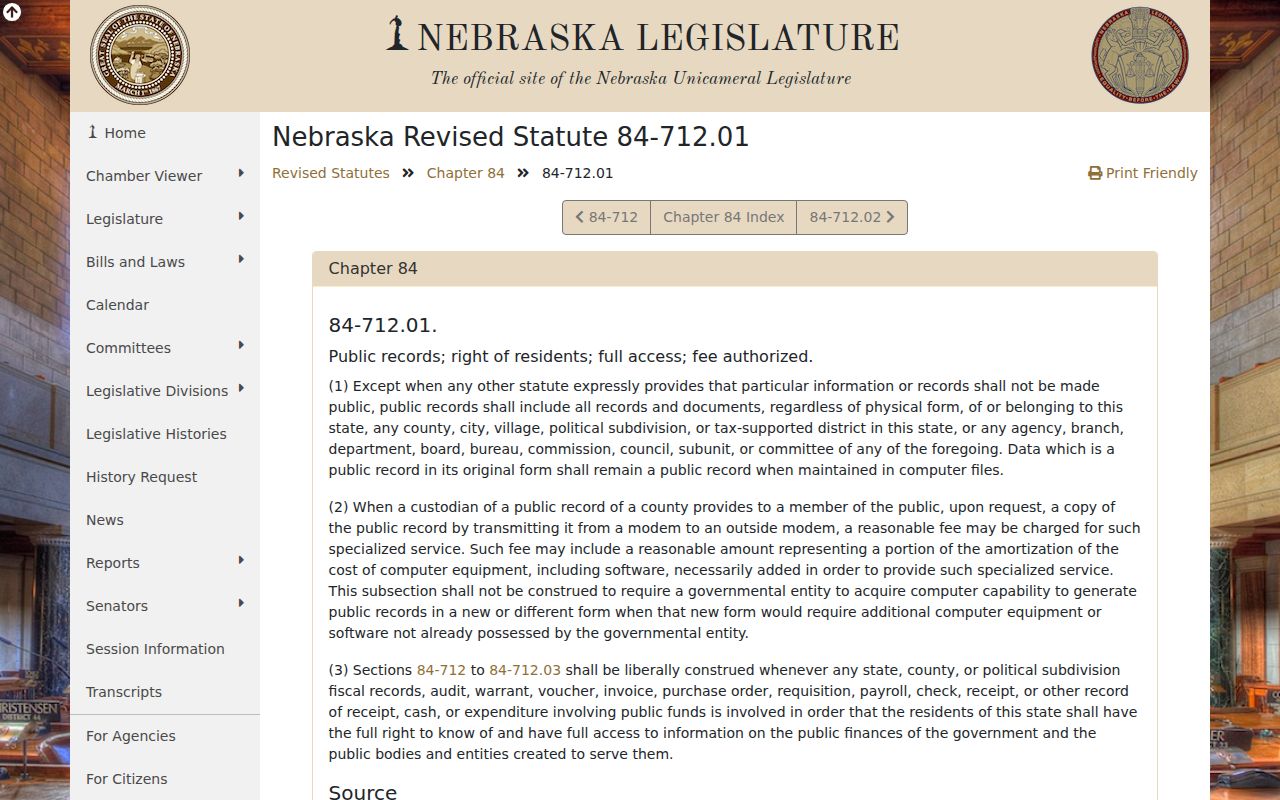
Naming the exact document and case details helps a request reach the right desk. It also cuts the risk of asking the wrong clerk for the record.
Public Access to Hooker County Civil Dockets
Nebraska's public-record framework allows you to examine and copy public records. Exceptions and court-specific rules still apply. Send a written Hooker County request under §84-712. The office should respond as soon as practical, and no later than four business days. That response might grant access, estimate time and cost, explain a delay, or cite a reason for denial. For a Hooker case file, the direct court-clerk route is still best.
Access rule: Section 84-712 provides the examination and copying framework. Section 84-712.01 defines public records. Confidential, sealed, redacted, or court-restricted material is not released merely because a case index is visible.
The Nebraska Judicial Branch filing-fee and cost schedule posts the current statewide fees.
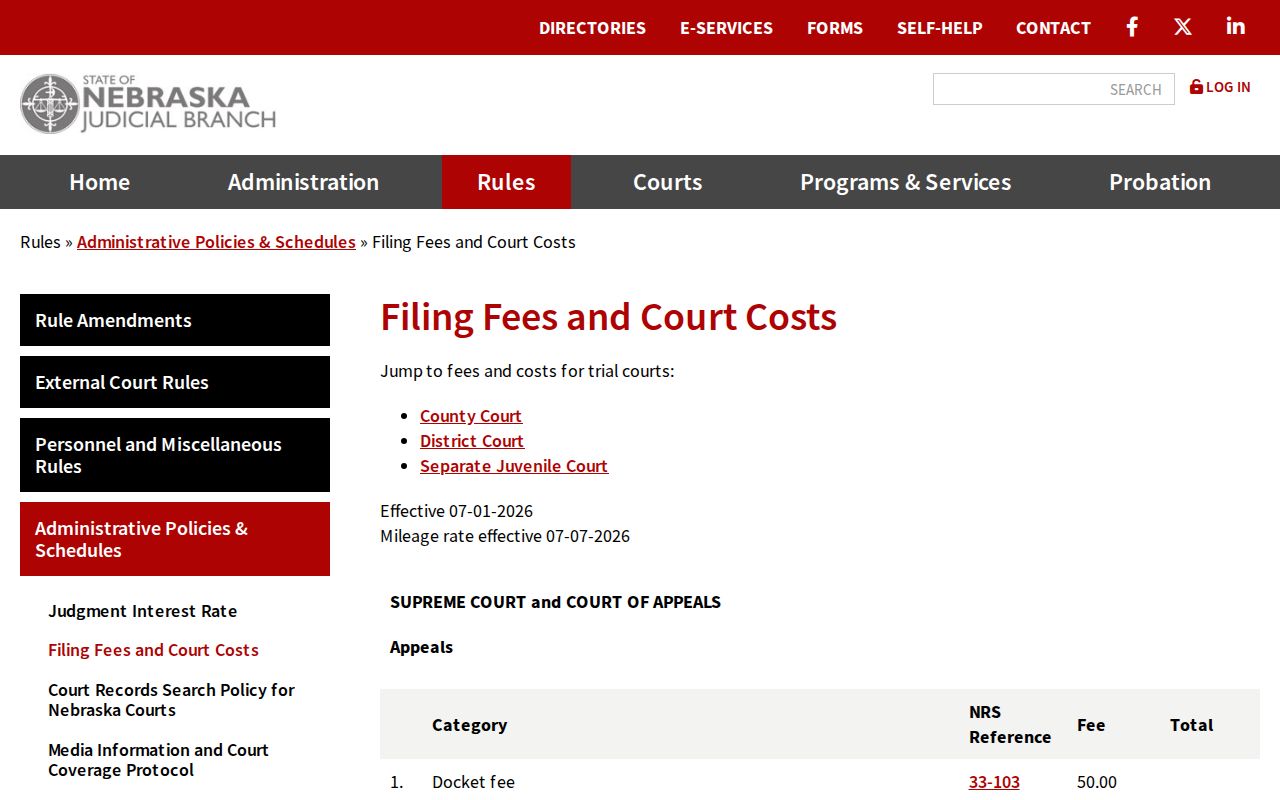
Check the live schedule and the clerk's estimate before you file or order a copy. Local and statewide fee documents can be updated at different times.
Hooker County Civil Docket Record Boundaries
A public docket index does not unlock every underlying item. Probate, guardianship, domestic-relations, mental-health, sealed, and redacted material can all carry limits. A caption will never show them. If a document is missing from JUSTICE, ask a question. Is it restricted, older paper material, gone under retention, or held by another custodian? Do not assume it never existed.
When the online record is older or thin, the proper Hooker clerk can search from whatever identifying details you have. Give the court and case type. An appeal, meanwhile, creates a separate appellate record apart from the trial-court file. Keeping those channels straight preserves the Hooker County civil docket as a precise court-record tool.